Helen Button is a New Zealand Lotto player whose name reached the news in November 2025 — not for a multimillion-dollar jackpot, but for a modest $1,469 prize on a Triple Dip ticket and the surprisingly long wait to actually be paid. Her experience shone a light on a part of playing Lotto that most people never think about until it happens to them: how prizes are claimed, and how long the money really takes to arrive. This guide explains exactly what Helen Button won, why her payout was delayed, and how prize claims, wait times and the odds behind games such as Keno and Powerball genuinely work in New Zealand.
Key Points
- Who she is: a New Zealand Lotto player who went public in November 2025.
- What she won: $1,469 on a Triple Dip ticket, checked at her local New World.
- The issue: because the prize was over $1,000, it could not be paid instantly and needed a formal claim.
- The wait: she was told to expect at least 10 working days; Lotto NZ says it aims to pay most prizes within about seven.
- The $18m myth: no official record links her to the anonymous $18 million Powerball jackpot won on a Kaeo ticket in 2006.
What Helen Button actually won
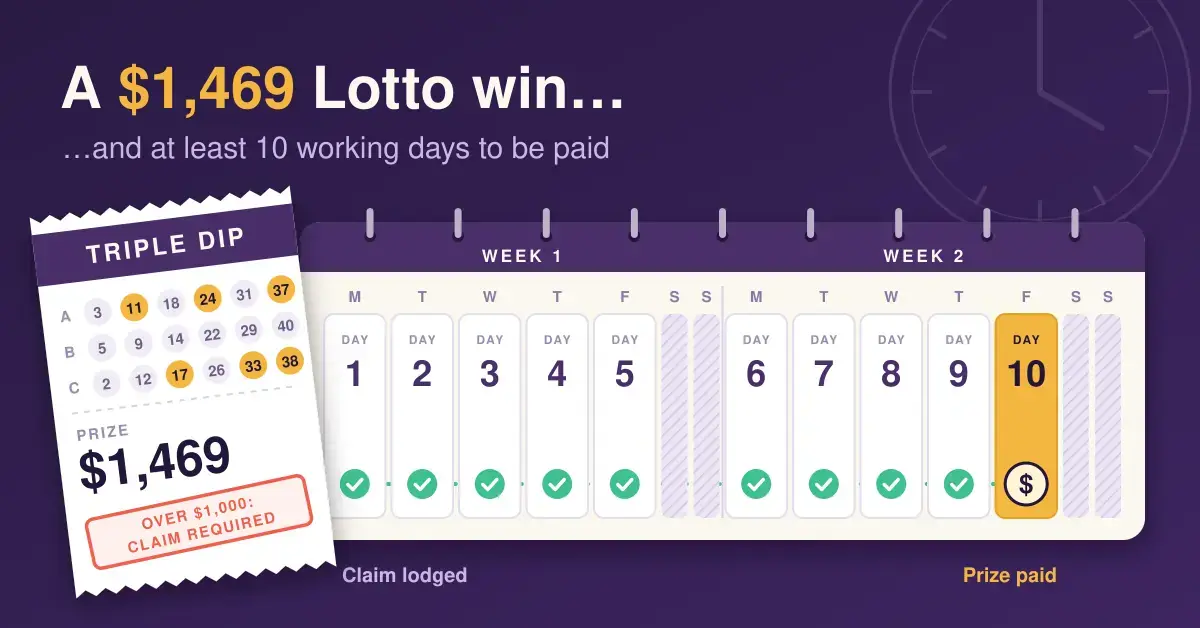
Helen Button won $1,469 on a Triple Dip ticket in late 2025. A Triple Dip is one of Lotto NZ’s ready-made “Dip” tickets, where the system randomly generates the lines for you rather than you choosing your own numbers. Button had her ticket checked at her local New World supermarket and found she had landed a prize — a genuine win, but well short of the life-changing sums that usually make headlines. By her own account, she had only ever collected small prizes before this one.
What made her story newsworthy was not the amount but what happened next. Because the prize was over $1,000, it could not simply be handed over at the counter. Button told RNZ that the delay in getting her money “took the joy out of winning,” and her case became a useful, real-world example of how prize claiming works once a win crosses that $1,000 line.
Was Helen Button the $18 million winner?
No public record connects Helen Button to the $18 million jackpot often mentioned alongside her name. That figure refers to a real event: on 20 May 2006, a single ticket bought in Kaeo, Northland, won $17,992,975 across Powerball and Lotto First Division — at the time the largest Powerball prize won by one ticket in New Zealand. However, the official Lotto NZ announcement never named the winner, describing them only as “a lucky Lotto player.” New Zealand lottery winners are allowed to stay anonymous, and the 2006 Kaeo winner did. Linking that anonymous jackpot to Button is not supported by any verifiable source, so this article treats the two as entirely separate.
Why her prize took more than a week to pay out
Helen Button’s prize was delayed because it was over $1,000, the threshold at which a win can no longer be paid instantly. Prizes of $1,000 or less are paid on the spot — cash or credited straight away — but anything above that requires a formal claim, identity and bank details, and processing time. Button was reportedly told to expect a wait of at least 10 working days, partly because a large number of people were claiming prizes around the same time.
Lotto NZ’s own position is that it aims to pay most claimed prizes within about seven working days. The gap between “up to seven working days” and “at least 10” is exactly what frustrated Button, and it is a realistic illustration of how busy periods can stretch the timeline. If you want the full official process, our guide on how to claim Lotto winnings in NZ walks through each step.
How Lotto prize claims work in New Zealand
How you claim a Lotto or Keno prize in New Zealand depends almost entirely on the size of the win. The $1,000 mark is the dividing line between an instant payout and a formal claim.
Prizes of $1,000 or less
Prizes up to $1,000 are the simplest. If you hold a paper ticket, you take it to any Lotto retailer, who scans it and pays you on the spot. If you played online through MyLotto, a prize of $1,000 or less is credited automatically to your MyLotto account, with no form to fill in. This is the fast, no-friction experience most casual players expect.
Prizes over $1,000
Prizes above $1,000 trigger a formal claim. For a paper ticket, you complete a prize claim form at a retailer or at Lotto NZ’s Auckland Head Office; for an online win, a claim link appears inside your MyLotto account. Either way you must supply contact and bank-account details so the money can be transferred, and the prize is paid by bank transfer rather than cash. Retailers normally keep or mark the ticket as part of this process, so sign the back of a winning ticket before you hand it over.
How long payment takes
Once a valid claim is lodged, Lotto NZ says it aims to pay most prizes within about seven working days, and online claims can be settled into a nominated bank account within a few working days of the form being submitted. Busy periods — a big must-win Powerball draw, for instance — can lengthen that wait, which is what Helen Button ran into. Very large prizes are handled differently again: Lotto NZ’s prize team contacts major winners directly to arrange the payout and support. Whatever the size, you have 12 months from the draw date to claim; you can read more about how long Lotto tickets stay valid before they expire.
Prize Claim Times in New Zealand
| Prize amount | How you claim | Typical wait |
|---|---|---|
| $1,000 or less (in store) | Show or scan the ticket at any Lotto retailer | Paid on the spot |
| $1,000 or less (online) | Credited automatically to your MyLotto account | Immediate |
| Over $1,000 | Complete a prize claim form (retailer, Head Office or MyLotto) with bank details | Around 7 working days; longer at busy times |
| Very large prizes | Lotto NZ’s prize team contacts you directly | Arranged individually |
The 2006 Kaeo jackpot: a separate piece of Lotto history
The $18 million Kaeo win of 2006 is a real and notable moment in New Zealand lottery history, even though it has nothing verifiable to do with Helen Button. The ticket, bought in the small Northland town of Kaeo, took home $17,992,975 — $17,702,362 from Powerball First Division and $290,613 from Lotto First Division. Lotto NZ called it the biggest Powerball jackpot ever won by a single ticket at that point, surpassing a $15.2 million Auckland win from September 2005.
The detail most relevant to players today is that the winner was never publicly identified. In New Zealand, going public is a choice, not a requirement, and many of the largest winners choose privacy. That is also why so many “winner backstory” articles online are unreliable: when a winner stays anonymous, any named personal narrative attached to the prize should be treated with caution.
Where Keno fits in
Keno is the fast, frequent cousin of Lotto, and it is the main game covered on this site. In New Zealand, Keno is drawn four times a day — at 10am, 1pm, 3pm and 6pm — compared with Lotto’s twice-weekly Wednesday and Saturday draws. You choose between 1 and 10 numbers (called spots) from a pool of 1 to 80, and 20 numbers are drawn each game. Stakes run from $1 up to $100 per game, and your prize scales with your stake. If you are weighing up the games, our explainer on how Keno and Lotto differ compares them side by side.
How the Keno Multiplier works
The Keno Multiplier is an optional add-on that multiplies any prize you win, and choosing it doubles the cost of your ticket. You do not pick the multiplier value yourself. A multiplier of 1.5x, 2x, 3x, 5x or 10x is drawn at random for each Keno draw, with the biggest values being the rarest — a 10x result is roughly a 1-in-86 chance. In other words, the Multiplier changes how much a win pays, never how likely you are to win in the first place.
Keno 10 prize table
Keno 10 (choosing ten numbers) is popular because it is the only prize group where you win even when none of your numbers come up. On a $1 play, the published prizes are:
| Numbers matched (Keno 10, $1 play) | Prize |
|---|---|
| 10 of 10 | $250,000 |
| 9 of 10 | $20,000 |
| 8 of 10 | $500 |
| 7 of 10 | $50 |
| 6 of 10 | $5 |
| 5 of 10 | $2 |
| 0 of 10 | $3 |
Matching all ten numbers is a 1-in-8,911,711 shot per line, not the much shorter odds sometimes quoted. With a 10x Multiplier, a $250,000 top prize would reach $2.5 million — which is also the ceiling for a single draw, as Lotto NZ proportionally reduces the highest Keno prizes if their combined value in one draw would exceed $2.5 million.
Keno, Lotto and Powerball: the odds compared
The clearest way to understand why Helen Button’s $1,469 is far more common than an $18 million headline is to compare the top-tier odds of each game. Keno’s jackpot is long, but Powerball’s is in another league, especially after the 13 September 2026 game change that lengthened its odds.
| Game | Top-tier chance (per line) |
|---|---|
| Lotto First Division | about 1 in 3.8 million |
| Keno 10 (match all 10) | 1 in 8,911,711 |
| Powerball jackpot | 1 in 53.7 million |
Since 13 September 2026, Powerball uses 14 Powerballs instead of 10, which stretched the jackpot odds from roughly 1 in 38.4 million to 1 in 53.7 million per line while adding a new lower division and a larger starting jackpot. Our breakdown of the odds of winning Powerball explains what the change means for everyday players.
Common mistakes winners make when claiming
Most claiming problems come from the same handful of avoidable errors. Helen Button’s frustration was partly expectation; the others below are practical.
- Expecting instant payment over $1,000. Any win above $1,000 needs a claim form and processing time — plan for about a week, longer during busy draws.
- Not signing a paper ticket. An unsigned ticket is a bearer document; signing the back helps prove it is yours before you claim.
- Losing the physical ticket. For in-store play the ticket is your proof of purchase; no ticket can mean no prize. Playing through MyLotto avoids this because wins are recorded to your account.
- Forgetting the 12-month deadline. Unclaimed prizes expire, and large sums do go unclaimed in New Zealand every year.
- Believing a “system” improves your odds. Every Keno and Lotto draw is independent and random; no number pattern, hot streak or strategy changes the probability of the next result.
What to do if you win a larger prize
If your win is substantial, slow down before doing anything public or irreversible. Sign the ticket, lodge the claim correctly, and expect Lotto NZ’s prize team to make contact for bigger amounts. One piece of genuinely good news for New Zealand winners is that the prize itself is not taxed — you can see the detail in our guide on whether you pay tax on Lotto winnings — although any interest you later earn on the money is taxable. Taking a little time to arrange banking and advice before the funds land is far more useful than chasing an instant payout.
Responsible Gambling
Lotto, Keno and Powerball are games of chance, not income strategies. The odds above are fixed and cannot be improved by any system, and over time the games are designed to return less than players stake. You must be 18 or over to buy tickets or play online through MyLotto in New Zealand. Only ever spend money you can afford to lose, and treat any win — large or small — as a bonus rather than a plan.
If gambling is causing stress for you or someone you know, free and confidential help is available 24/7 from the Gambling Helpline Aotearoa on 0800 654 655. This article is factual information only and is not financial, legal or gambling advice.
Sources
- RNZ — She’s won Lotto, so where is her money? (13 November 2025)
- NZ Lotteries / Scoop — $18 million Powerball jackpot won by a Kaeo ticket (May 2006)
- Lotto NZ — How to play Keno
- Lotto NZ — Frequently asked questions (claiming prizes)
- Lotto NZ — More Powerballs, more prizes from 13 September 2026
- Gambling Helpline Aotearoa
Frequently Asked Questions (FAQ)
How much did Helen Button win?
Helen Button won $1,469 on a Triple Dip ticket, which she had checked at her local New World supermarket in late 2025.
Why did her prize take so long to pay out?
Her prize was over $1,000, so it could not be paid instantly and required a formal claim with bank details. Lotto NZ aims to pay most prizes within about seven working days, but she was told to expect at least 10 because many people were claiming at the same time.
Did Helen Button win $18 million?
There is no public record linking Helen Button to the $18 million jackpot won on a Kaeo, Northland ticket in 2006. That winner was never publicly named, and New Zealand allows winners to stay anonymous, so the two should not be treated as the same person.
How are Lotto prizes of $1,000 or less paid?
Prizes of $1,000 or less are paid instantly. A paper ticket is scanned and paid at any Lotto retailer, while an online win is credited automatically to your MyLotto account with no claim form needed.
Can you win Keno with zero matches?
Yes. In Keno 10, where you choose ten numbers, matching none of them returns a $3 prize on a $1 play, making it the only Keno prize group that pays out for a complete miss.