A Lotto syndicate is simply a group of people who pool their money to buy more lines in a draw and share any prize. It is one of the most common ways New Zealanders play Powerball with friends, family and workmates, because a shared budget buys far more coverage than one person usually would. The catch is administrative, not mathematical: Lotto NZ treats only one person as the legal owner of a ticket and will not split a prize or settle an argument for you. This guide explains the real rules in Aotearoa New Zealand, how to put a syndicate together properly, what a written agreement should cover, how tax and prize claims work, and the mistakes that turn a lucky night into a legal fight.
Key Points
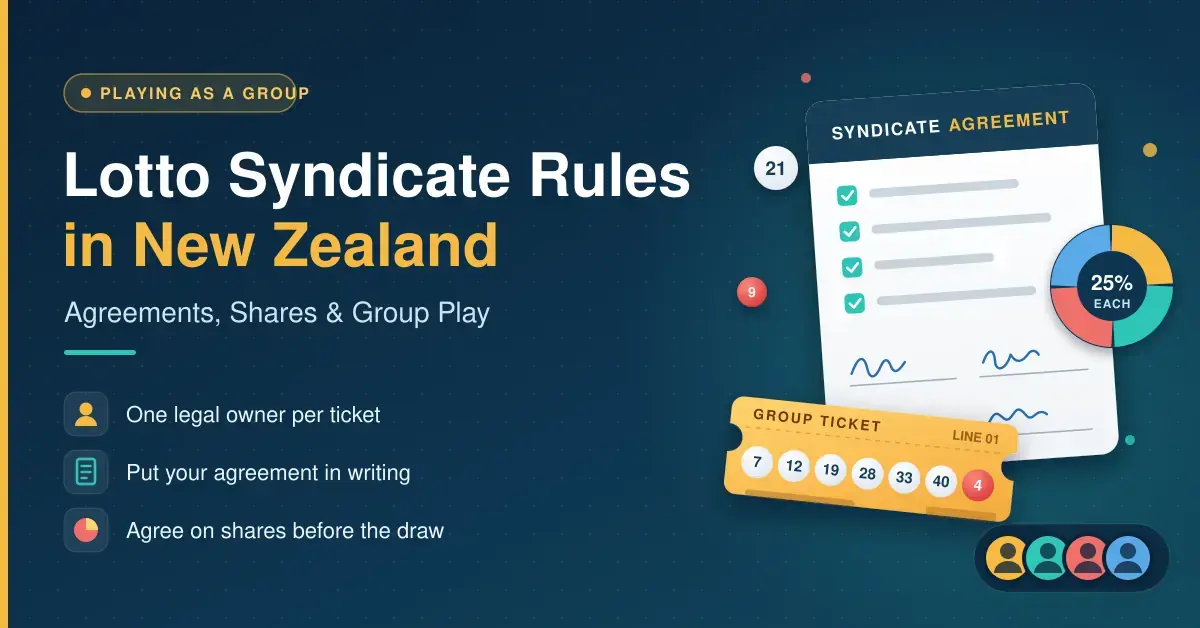
- One legal owner: Lotto NZ recognises only the person who holds the ticket or MyLotto account as the prize owner — it will not split a prize or settle a group dispute.
- No official team account: MyLotto has no built-in syndicate or ‘team’ login; online groups buy through one member’s personal account or use a third-party tracking tool.
- Put it in writing: A signed agreement listing members, shares and rules is the only real protection a group has.
- Prizes are tax-free: New Zealand lottery winnings are untaxed windfalls, but interest earned after you bank them is taxed.
- Share the ticket weekly: Experts advise sending every member a photo of the ticket before each draw and playing the same numbers.
- Powerball odds (from 13 Sep 2026): Division 1 is now about 1 in 53.7 million per line after four extra Powerballs were added.
What is a Lotto syndicate, and is it legal in New Zealand?
A Lotto syndicate is any group that agrees to share the cost of entries and split whatever those entries win. Running a private syndicate among friends, whānau or colleagues is completely legal in New Zealand. The Lotto Rules define a syndicate broadly as a group of people who share in a game’s prizes, whether the arrangement is formal or informal.
The line to watch is the difference between a private group and a commercial syndicate. Under Lotto NZ’s rules, a commercial syndicate is one in which someone profits from forming, running, promoting or assisting it. Publicly advertising a syndicate or charging a fee to join can cross that line, so keep your group private and non-commercial. Lotto NZ has also blocked offshore and international syndicates from buying into large Powerball draws — such tickets are void and ineligible for a prize.
Who legally owns a syndicate ticket?
Lotto NZ recognises only one owner per ticket: the single person who holds the paper ticket, or whose MyLotto account bought the entry. It does not matter whether twenty colleagues each chipped in $5 — in the operator’s eyes, the named holder is the sole legal claimant of any prize. Lotto NZ will not divide a payout between members and will not get involved in an internal disagreement.
That single-owner rule is the entire reason syndicates need their own paperwork. If the group has no record of who was in and what they were owed, the prize can legally sit with one person, and the only way to challenge that is in court. In a real Auckland case, a disputed win was frozen by an injunction for about two years before it was resolved.
Is there a limit on how many people can join?
There is no official legal cap on the number of members in a private syndicate. A group can be two flatmates or a whole office floor. The practical limit is trust and administration: the more people involved, the more important clear records and a signed agreement become, and the harder an informal cash-in-hand arrangement is to manage fairly.
How to set up a syndicate and choose a manager
The first practical step is to appoint one organised person as the syndicate manager, often called the captain. The captain is the administrative engine of the group: they collect each member’s contribution, buy the agreed entries before sales close, keep the ticket safe, and distribute proof of purchase. Choose someone reliable and communicative rather than simply whoever volunteers first.
Lotto draws take place on Wednesday and Saturday evenings, and ticket sales close at 7:30pm on draw night. Build in a buffer: collect money and buy the entry well before the cut-off so a late payment or a busy shop queue never costs the group a draw.
What are the captain’s core responsibilities?
Giving the manager a clear, repeatable checklist keeps every draw transparent and removes most arguments before they start:
- Keep a payment record. Maintain a simple shared spreadsheet or group chat log showing who paid, how much, and for which draw.
- Buy early. Purchase the agreed entry ahead of the 7:30pm draw-night close, ideally the day before, so nothing is rushed.
- Share the ticket every week. Send every member a clear photo of the ticket (numbers and barcode) before the draw. An Auckland lawyer who has handled syndicate disputes recommends exactly this, plus playing the same numbers every week, because both make a later dispute far easier to settle.
- Store it safely. Keep the physical ticket somewhere secure, or buy through MyLotto online so the entry is logged to an account automatically.
Drafting a syndicate agreement that actually protects you
A syndicate agreement is a short private contract signed by every member before the draw. It does not need a lawyer and does not need legal jargon — it simply needs to state, in plain English, who is in the group, how much each person pays, how any prize is divided, and what happens in the awkward situations. Because Lotto NZ will not mediate, this document is the only thing standing between your group and a ‘who said what’ argument if the numbers come up.
A verbal agreement is legally binding in New Zealand, but it is extremely hard to prove. A signed sheet, or an online tool that records members and payments, removes the doubt entirely.
Which clauses should the agreement include?
- Share definition. State whether prizes are split equally per member, or in proportion to how much each person contributed.
- Missed payments. Spell out what happens if someone does not pay before the deadline — usually ‘no pay, no play’ for that draw, with no exceptions.
- Small prizes. Decide in advance whether a minor win (say a lower-division cash prize) is paid out straight away or rolled into more lines for the next draw.
- New and departing members. Require any change in membership to be written down and signed before the next entry is bought.
- Publicity. Agree now whether the group would stay anonymous or go public if it won a major prize.
Can you run a syndicate online through MyLotto?
You can buy syndicate entries online, but it is important to be clear about one thing the operator does not offer: MyLotto has no built-in ‘syndicate’, ‘team’ or group account. You cannot create a separate shared login that holds the group’s money and splits prizes automatically. Anyone claiming MyLotto has a dedicated ‘Team Play’ account feature is mistaken.
In practice there are three realistic ways to run a group online or offline:
- Through one member’s personal account. The captain registers one MyLotto account (you must be 18 or over and in New Zealand), buys the entry from their balance, and shares a screenshot with everyone. Winnings of $1,000 or less are credited to that account automatically after the draw; prizes above $1,000 require an online claim form.
- With a third-party syndicate tool. Independent services such as MyLottoSyndicate.nz let an organiser add members, track who has paid and share a ticket photo before each draw (uploads are blocked after the draw to stop a winning ticket being swapped out). These tools are not Lotto NZ products and do not hold money or buy tickets — the organiser still collects and pays out directly.
- At a retail store. The captain buys the physical ticket and photographs it for the group.
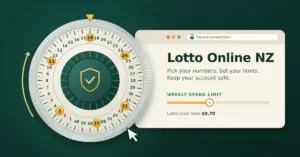
One online limit matters for large syndicates: MyLotto applies a rolling 7-day spending cap (a maximum of $150 across Lotto NZ games), and new players must actively choose a weekly limit. A big entry such as a Combo 10 with Powerball costs well over that cap, so it cannot be bought online in a single transaction and is usually purchased in store.
How are prizes and tax handled for a syndicate?
New Zealand lottery prizes are tax-free windfalls. If you are a New Zealand tax resident, you keep 100% of the face-value prize with no income tax deducted — this is confirmed by how the IRD treats lottery winnings. There is also no gift duty in New Zealand (it was abolished in 2011), so a captain sharing out each member’s agreed portion creates no gift-tax liability.
What is taxed is what the money earns afterwards. Once a prize is banked, any interest it generates is subject to Resident Withholding Tax, and income from investing it (dividends, rent) is taxable in the normal way. Learn more in our guide on whether you pay tax on Lotto winnings in NZ.
How does a group actually claim a large prize?
For a major win, do not have one person quietly receive the whole amount and then make large personal transfers to everyone else — that is exactly the situation a bank’s anti-money-laundering checks and the IRD may question. Instead, use Lotto NZ’s prize-claim process, which lets a group be documented, and keep your signed agreement with it. A written agreement plus the official claim form is your proof that the transfers are a legitimate shared windfall, not undeclared income. See our walkthrough of the Lotto prize claim process for the steps.
Which entry types suit a syndicate?
Pooling money makes larger, higher-coverage entries affordable. A standard Lotto line costs $0.70 (minimum four lines), adding Powerball costs an extra $0.80 per line (so a Lotto + Powerball line is $1.50), and Strike is $1.00 per line. Many syndicates choose a Combo entry, where you pick extra numbers on one line and the terminal generates every possible six-number combination from them. The table below compares the common options.
Comparison
| Entry type | How it works | Lines / approx. cost (with Powerball) | Practical note for syndicates |
|---|---|---|---|
| Lotto + Powerball dip | Terminal auto-picks your lines | Scales per line (a Lotto + Powerball line is $1.50) | Simplest shared entry; set the number of lines to your weekly budget |
| Combo 8 (+ Powerball) | Pick 8 numbers; every six-number line is generated | 28 lines — about $42.00 | Fits within the $150 online spend cap, so it can be bought on MyLotto |
| Combo 10 (+ Powerball) | Pick 10 numbers; every six-number line is generated | 210 lines — about $315.00 | Exceeds the $150 online cap — usually bought in store |
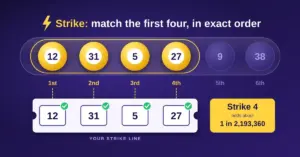
| Strike | Pick 4 numbers in exact drawn order | From 1 line at $1.00 per line | Separate jackpot; can be added to the group’s Lotto ticket |
For the full breakdown of how combos scale, see our guide to the Lotto Combo cost in NZ and the current Lotto ticket prices.
Common syndicate mistakes and how to avoid them
The single biggest source of syndicate disputes worldwide is the ‘forgotten member’ — a regular who has paid for months but happens to be away, sick or short of cash on the day the winning ticket is bought. Overseas, people have been cut out of multimillion-dollar wins for exactly this reason. A clear, written rule prevents it. Avoid these recurring traps:
- Buying on credit. Only use money actually collected. If a member has not paid by the deadline, pause their spot for that draw — no IOUs.
- Holding the ticket in secret. Always circulate a photo of the ticket to the whole group before the draw, so no one person controls the only proof.
- Casual verbal add-ons. Never accept a last-minute ‘put me in this week’ without it being written down and the agreement updated.
- Unclear scope. State which games the fund covers. If the group also buys daily games such as Keno or Bullseye, say so, rather than arguing about it after a win.
Keeping a syndicate fun and affordable
A syndicate is a social hobby, not an investment. The odds do not improve because a group is buying together — each line still has the same fixed chance, and buying more lines only spreads the (very long) odds across more entries while splitting any prize among more people. From 13 September 2026 Lotto NZ added four extra Powerballs, so Powerball Division 1 now sits at roughly 1 in 53.7 million per line, up from about 1 in 38.4 million. You can read more about the current odds of winning Powerball in NZ.
Because no system, hot-number theory or buying volume can influence which balls are drawn, a syndicate’s weekly contribution should come strictly from money the group can comfortably afford to lose. Keep the buy-in small and steady, let people opt out without pressure, and never fund entries from shared workplace or household money that is meant for something else. If the activity stops feeling fun, that is the signal to scale back.
Responsible play and disclaimer
This article is general information about New Zealand Lotto syndicate rules and is not legal, tax or financial advice. Lotto NZ games are a form of gambling; outcomes are random and most tickets do not win. For a large win or a complex agreement, speak to a lawyer or accountant. You must be 18 or over to hold a MyLotto account. If gambling is causing harm for you or someone you know, free and confidential help is available 24/7 from the Gambling Helpline on 0800 654 655 or by texting 8006.
Sources
- Lotto NZ — Powerball changes (13 September 2026)
- Lotto NZ — Lotto Rules 2025 (syndicate and commercial syndicate definitions)
- NZ Herald — The perks and pitfalls of a Lotto syndicate: experts give their tips
- Stuff — Powerball odds get longer as Lotto NZ adds four more balls
- Inland Revenue (IRD) — Lotteries and lottery duty
- Gambling Helpline Aotearoa — free, confidential support
Frequently Asked Questions (FAQ)
Who legally owns a Lotto syndicate ticket in New Zealand?
Lotto NZ recognises only the single person who holds the paper ticket or whose MyLotto account bought the entry as the legal owner. It will not split a prize between members or settle an internal dispute, which is why a written agreement matters.
Do we really need a written syndicate agreement for a casual work pool?
It is strongly recommended. A verbal deal is binding but very hard to prove. A short signed sheet listing members, contributions, share splits and a missed-payment rule is cheap insurance against a costly argument if the group wins.
Are syndicate winnings taxed in New Zealand?
No. Lottery prizes are tax-free windfalls for New Zealand tax residents, and there is no gift duty when the captain shares out each member’s portion. Only the income the money later earns, such as bank interest, is taxable.
Does MyLotto have a dedicated syndicate or team account?
No. MyLotto has no built-in syndicate or team login. Online groups buy through one member’s personal account and share proof, or use a separate third-party tool that tracks members and payments but does not hold money or buy tickets.
What should we do if a regular member forgets to pay before a draw?
Apply a strict ‘no pay, no play’ rule set out in your agreement: if someone has not contributed by the captain’s deadline, their spot is paused for that draw. Writing the rule down in advance keeps it fair and avoids resentment.